


To link to this article from your blog or webpage, copy and paste the url below into your blog or homepage.
Gangs
an article by our site
U.S. law enforcement authorities claim that there are now (2010) over 1 million members of criminal gangs inside the country. These 1 million gang members are responsible for up to 80% of the crimes committed in the United States each year.
Youth gangs are primarily composed of urban poor, though more recently the trend is towards gangs in smaller communities and suburbs. In 1985 there were about 2200 gangs totaling some 96,000 members in 300 cities and towns across the U.S. In 60 cities surveyed, there were approximately 3400 gang-related homicides between 1967 and 1980. In addition, gangs are becoming more specialized in their criminal acts, using extortion of public officials, along with murder, robbery, assault, mugging, and property offenses. (Source: Egger, Steven A., "The New Predators," The Futurist, April 1985, pp. 15-16) Gang members share several common traits: They have lived in poor neighborhoods all their lives; they quit school early; they find structure and a sense of belonging in the gangs that they don't find in the dominant culture; they place a premium on physical prowess; they like to drink; they have worked only occasionally in their lives; and they have an erratic relationship with their families. (Source: "Life in City's Gangs," New York Times, September 27, 1983, Section B, p. 1) Children of recent immigrants are easy recruits because they become Americanized before their parents do, so lack ties to both their old and the new culture. Gangs give them identity.

A gang
Gang activity is often transplanted when families flee the inner cities, from Los Angeles to Phoenix, from Chicago to Indiana, Iowa, Wisconsin, Minnesota, and Michigan, for example. Gangs thrive in suburban communities because the communities refuse to believe they exist. According to a 1983 federal study, only four of 27 communities reporting gang problems had written policies for handling gangs. Malcolm Klein, a University of Southern California sociologist says: "About the only thing that would help eliminate gangs is to wipe out poverty, change the employment structure, eliminate prejudice—pretty difficult things to do." (Source: "Street Gangs No Longer Just a Big-City Problem," U.S. News & World Report, July 16, 1984, pp. 108-9)
"Everyday quarrels that used to result in flailing fists and bloody noses . . . now end, with epidemic frequency, in gunshots . . . Today's kids are desensitized to violence as never before, surrounded by gunfire and stuffed with media images of Rambos who kill at will. For many inner-city youngsters, poverty and hopelessness yield a 'what the hell' attitude that provides the backdrop for gunplay. Family breakdowns further fuel the crisis [along with] the no-problem availability of guns . . ." (Source: "Kids Who Kill," U.S. News & World Report, April 8, 1991, p. 26) In fact, over three and one half million guns are sold in the U.S. each year in 1990, but that is nothing compared to the 10,800,000 sold in 2011 and 2012 is looking to top that.

School slayings 1990-2013
Gang-related activity and violence has increased along the U.S. Southwest border region, as US-based gangs act as enforcers for Mexican drug cartels. (Source: FBI — 2011 National Gang Threat Assessment – Emerging Trends) The most common reason people suggest as a motive for joining gangs is unemployment. (Source: ICE and Local Law Enforcement Target Immigrant Gangs) But obviously many join because of the desire of power, respect, money and protection.
Gangs are using the Internet to communicate with each other, facilitate criminal activity, spread their message and culture around the nation. As Internet pages like MySpace, YouTube, Twitter, AIM, and Facebook become more popular, law enforcement works to understand how to conduct investigations related to gang activity in an online environment. In most cases the police can and will get the information they need, however this requires police officers and federal agents to make formal legal requests for information in a timely manner, which typically requires a search warrant or subpoena to compel the service providers to supply the needed information. (Source: Combating Gangsters Online, Author: Matthew O'Deane, April 2011, pp. 1-7, Publisher: Federal Bureau of Investigation)
National Gang Intelligence Center of the Federal Bureau of Investigation asserted that "There are approximately 1.4 million active street, prison, and outlaw gang members comprising more than 33,500 gangs in the United States." Approximately 230,000 gang members were in U.S. prisons or jails in 2011.
A 2006 Sun-Times article reports that gangs encourage members to enter the military to learn urban warfare techniques to teach other gang members. A January 2007 article in the Chicago Sun-Times reported that gang members in the military are involved in the theft and sale of military weapons, ammunition, and equipment, including body armor. (Source: CBS2Chicago - "Chicago Gang Graffiti Showing Up In Iraq") Gang violence costs more than $100 billion a year. (Source: http://www.teenviolencestatistics.com/content/gang-violence.html)
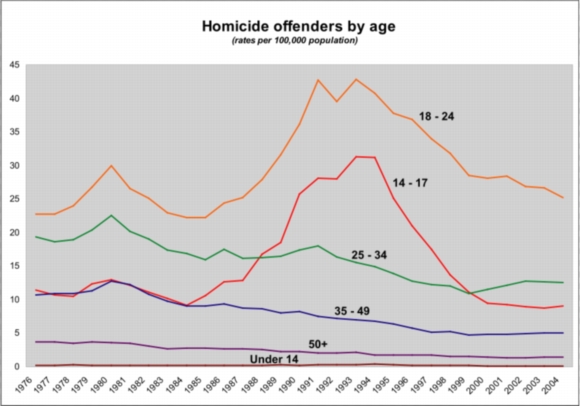
(Source: Bureau of Justice Statistics)