


To link to this article from your blog or webpage, copy and paste the url below into your blog or homepage.
Power Divided is Power Checked - The Argument for States' Rights
a book by Jason Lewis
(our site's book review)
The Amazon blurb says that in Power Divided is Power Checked - The Argument for States' Rights, Lewis reminds us that the concept of states' rights, as bequeathed by the Founding Fathers to a grateful nation, was about a constitutional framework intended to limit the missteps of government and provide the greatest amount of freedom and decision-making power to the citizens of the ''several states.'' He defines the essence of our constitutional republic and highlights the legal history of the relationship between the states and the federal government.

Lewis sounds the alarm for states' rights and offers a way out of the constitutional malaise the nation finds itself in
Lewis sounds the alarm for states' rights and offers a way out of the constitutional malaise the nation finds itself in. And, if his prescription for returning power to the states seems radical, Lewis would argue that this is only because we are unaware of just how far America has drifted from our limited government tradition. He calls upon us to understand what it means to live in America, recognize how fragile our republic has become, reclaim our tradition, and in doing so, reclaim our freedom.
From the beginnings of the 'American experiment,' Jason Lewis describes the judicial unraveling of our liberties and offers insight into the factors that play a part in the continued erosion of our constitutional protections as evidenced poignantly by recent Court decisions related to healthcare, same-sex marriage, and Arizona's new immigration law [no working or living in Arizona for illegals without permission.]
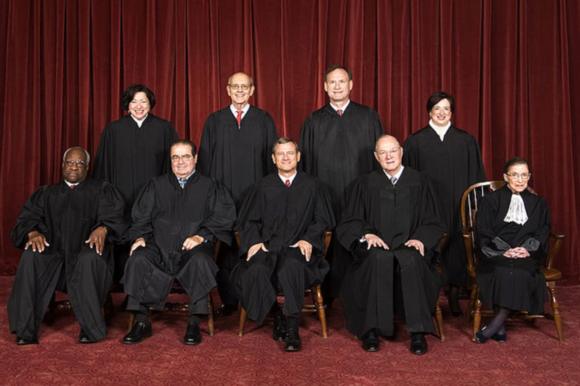
Jason Lewis describes the judicial unraveling of our liberties and offers insight into the factors that play a part in the continued erosion of our constitutional protections as evidenced poignantly by recent Court decisions
''[Jason Lewis] has been a force in Minnesota for two decades, lacerating Democrats, centrist Republicans and conservative apostates. He is to Minnesota Republican politics what radio titan Walter Winchell was to New York politicians: a force capable of delivering migraines.''--The Washington Post
Federalist Paper #51
In this Federalist Paper, James Madison explains and defends the checks and balances system in the Constitution. Each branch of government is framed so that its power checks the power of the other two branches; additionally, each branch of government is dependent on the people, who are the source of legitimate authority.

If men were angels, no government would be necessary. If angels were to govern men, neither external nor internal controls on government would be necessary
“It may be a reflection on human nature, that such devices [checks and balances] should be necessary to control the abuses of government. But what is government itself, but the greatest of all reflections on human nature? If men were angels, no government would be necessary. If angels were to govern men, neither external nor internal controls on government would be necessary. In framing a government which is to be administered by men over men, the great difficulty lies in this: you must first enable the government to control the governed; and in the next place oblige it to control itself. A dependence on the people is, no doubt, the primary control on the government; but experience has taught mankind the necessity of auxiliary precautions.”
The Tenth Amendment says that the Federal Government only has those powers delegated in the Constitution. If it isn't listed, it belongs to the states or to the people.
However, "the Constitution in Article VI ("The Supremacy Clause") made any valid exercise of federal law (and the Constitution enumerated a long list of federal powers, including the broad power to regulate commerce) superior to any state law "to the contrary." Few would deny that the political values of justices, as well as theories of constitutional interpretation, play a role in their decisions in specific cases. The conservative wing of the Court, for example, generally favors a restrictive interpretation of the federal commerce power (and therefore a broad view of states' rights), favors an expansive interpretation of the 10th and 11th Amendments, and typically has a narrower view of how the 14th Amendment limits choices available to states (except for favored individual rights, such as the right to bear arms). (Source: The Question of States' Rights: The Constitution and American Federalism (An Introduction), )

The conservative wing of the Court typically has a narrower view of how the 14th Amendment limits choices available to states (except for favored individual rights, such as the right to bear arms)
"All nine members of the Court agreed: “States are not the sole intended beneficiaries of federalism… . An individual has a direct interest in objecting to laws that upset the constitutional balance between the National Government and the States… . Fidelity to the principles of federalism is not for the States alone to vindicate.” Justice Kennedy also reminded us that “state sovereignty is not just an end in itself: Rather, federalism secures to citizens the liberties that derive from the diffusion of sovereign power.”" (Source: Rights, Powers, Dual Sovereignty, and Federalism, Robert A. Levy, Cato Institute)
"Perhaps resisting the mild despotism of our time, the administrative and regulatory state, requires a renewed commitment to localism. Such a commitment, of course, requires its own institutional and constitutional arguments. But we should not confuse the forms for the substance, and Tocqueville more than others shows why a healthy life in the modern world requires us to think about the “rights” of states and localities." (Source: Dividing Democracy: Three Arguments for States’ Rights, Jack Carlson, Compass Journal)

As Justice Kennedy says, federalism secures to citizens the liberties that derive from the diffusion of sovereign power. A balanced diffusion seems like the best recipe
The book Power Divided is Power Checked - The Argument for States' Rights makes a wise and logical argument right in the title: Power Divided is Power Checked is the best prescription for a just society where the states and the nation share rights equally. As Tocqueville assures us, a healthy life in the modern world requires us to think about the rights of states and localities." As Justice Kennedy says, federalism secures to citizens the liberties that derive from the diffusion of sovereign power. A balanced diffusion seems like the best recipe.

Biden is a doddering old sock puppet of superliberals AOC and Kamala Harris and his cabinet is a totally weaponized propaganda wing and hit squad for leftist overreach
Biden's corrupt, bribe fueled, topheavy, weaponized federal government is a government seriously out of whack, with a corrupt FBI, corrupt Justice Department, corrupt Homeland Security, corrupt attorney general, and corrupt IRS. Both Alejandro Nicholas Mayorkas and attorney general Merrick B. Garland need to be impeached ASAP! And states rights restored to their Reagan administration level! Biden is a doddering old puppet of superliberals AOC and Kamala Harris and his cabinet is a totally weaponized propaganda wing and hit squad for leftist overreach.

Biden learned the art of lying from the ultimate expert: Barack Obozo

Biden takes his marching orders from the queen of superliberals: AOC